
The US Department of Justice vs Google trial has wrapped up, and some interesting things came out of the hearing about how Google actually ranks pages. Most of it reinforces what we have been telling clients for years.

Table of Contents
What the trial documents revealed
Marie Haynes is an SEO consultant who has done a deep dive on the findings from the DOJ case. She summed them up in a single paragraph:
Google improves by learning what users interact with. Every page is stored in the index along with signals such as clicks, queries and spam score. While PageRank remains a signal, it is just one of many, and in fact, is nowhere near as important as information stored about the webpage itself. AI Models such as RankEmbed BERT are fine tuned by user preference and quality rater scores. User data also determines how often Google crawls your pages.
You can read the full detail on her blog.
These findings reiterate many of the recommendations we have been giving clients in our SEO Audits for years, and reinforce the idea that ranking today is as much about user experience as it is about traditional SEO tactics like backlinks. Two things in particular stand out.
Clicks and click through rate are critical
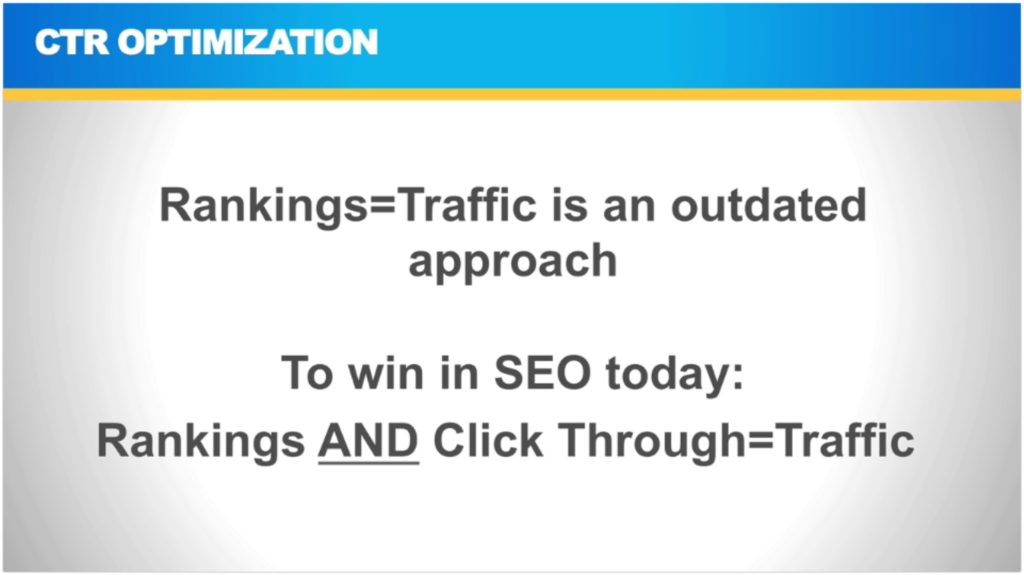
Clicks and click through rate (CTR) are super important, so you should optimise your meta descriptions for CTR and make sure your open graph images are on point.
I can’t hammer on this point enough. If you can take your click through rate from 2% to 3% with better written meta descriptions, that is a 50% increase in traffic from the same rankings, and there is a feedback loop that will improve rankings over time.
Here is our short training on writing meta descriptions. Writing better meta descriptions is basically free money. I have also covered open graph images in detail in Hidden SEO.
User engagement and user experience: make sure your content doesn’t suck

User engagement is important, and most content on the web absolutely sucks. In some ways AI is just making this worse, now that low quality content can be produced at scale.
A couple of years ago I shared three content tactics we use for clients to improve user engagement and conversions. You can read them in how to write better content. The early close technique in particular can dramatically improve conversions in some cases.
A tool we have been using for local SEO
In Google is a paid search engine I shared the Google Ads tools we use. On the SEO side, a tool we have been using that is amazing for local SEO and Google Maps SEO is Search Atlas.
It does a huge amount of stuff. We actually wouldn’t recommend their Otto AI feature for most people, but the Google Maps tools are excellent. If Google Maps rankings are important to you it is worth checking out. Three features we love:
AI generated responses to reviews. This is especially good for businesses with a lot of review volume. We do quite a bit of franchise SEO work, and for these businesses replying to and managing reviews is a lot of work. Search Atlas now automates a lot of it for us.
Fully locking Google Maps listings. This is the first tool we have found that lets you fully lock listings and protect them from changes. In high competition markets, competitors will often make public edits to Google Maps listings to hurt the rank of the listing. Plenty of tools will monitor for changes like this, but Search Atlas is the first we have found that locks the listing and reverts any changes made.
GeoGrid rank tracking. Again, a ton of tools have this type of geography based rank tracking, but we have found Search Atlas to be extremely fast and much cheaper for it.
There is a free trial at SearchAtlas.com if you want to take a look.
The takeaway from the trial is simple: Google is watching what people do with your pages. Earn the click with a better meta description and open graph image, then earn the engagement with content that gets to the point. If you would like us to look at your rankings or your site speed, get in touch with your URL and what you are trying to achieve.
This article was first sent to the WP Speed Fix email list. If you would like tips like this in your inbox, you can subscribe here.