
“Google is a paid search engine with some free results, act accordingly.” I said this for the first time maybe 10 years ago at a small SEO workshop. It was a bit dramatic at the time, but at this point in 2025 I think we can safely say it is true.
If you are like most of the customers we work with, you have probably seen a dramatic drop in SEO and organic traffic over the last year as Google has optimised the search results for ads, for AI snippets and for essentially anything but the regular organic results.
Table of Contents
An 80% drop in traffic with no change in rankings
We have seen our own click through rate (CTR) in organic search go from roughly 10 to 15% for terms where we are in positions 1 to 3, down to 2 to 3%, without any change in rankings. That is an 80% drop in traffic.
Even without all the AI results and other noise Google has injected into the results, for most searches done on mobile it is a good two to three scrolls at a minimum before you start getting to the regular organic listings.
Try it yourself. Search for a plumber or a dentist in your city and you will see four ads at the top, maybe a paid Google Maps listing, then the regular Google Maps listings, and only then the regular search results.
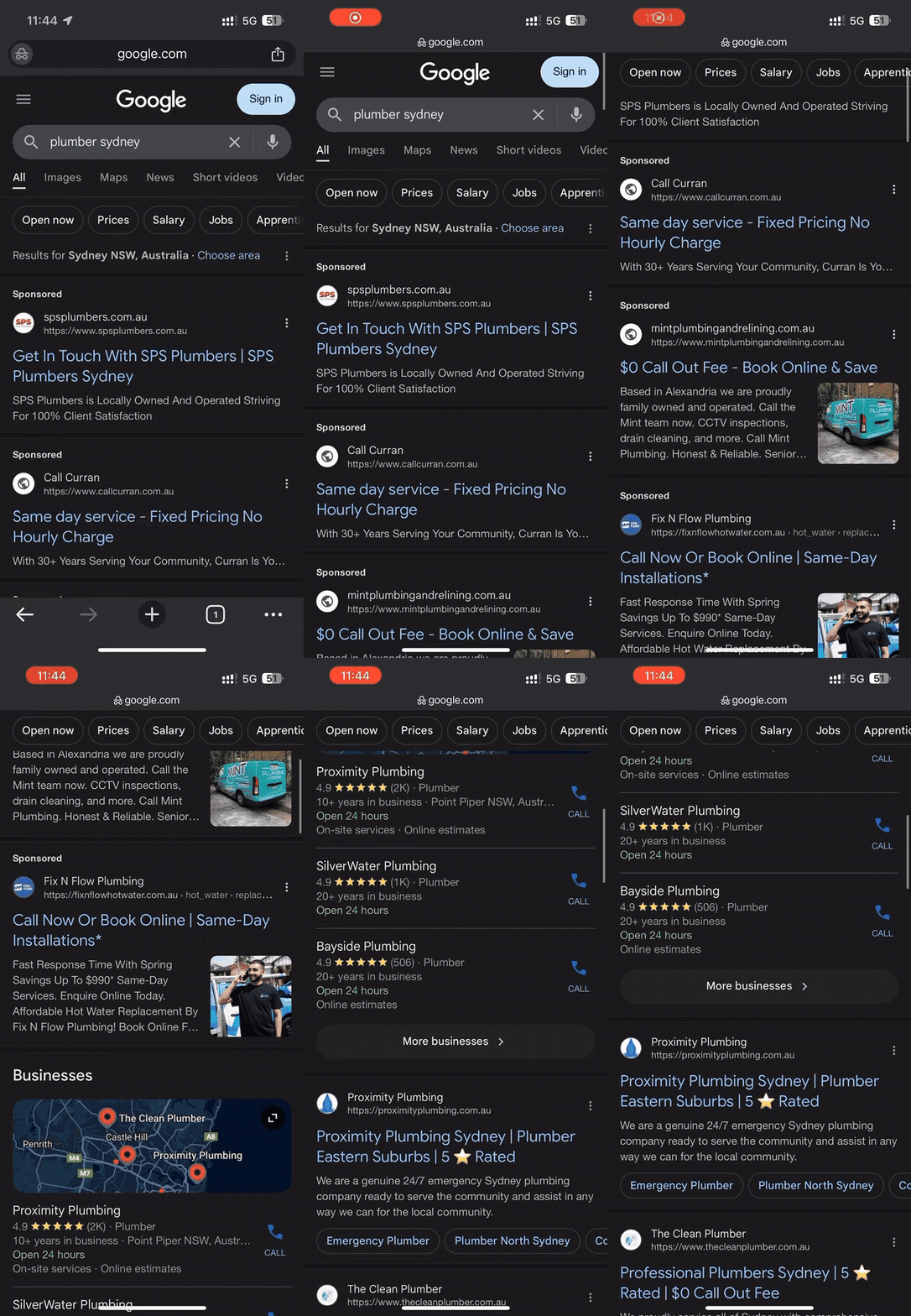
In 2025, if search is an important marketing channel for you, you need to pay up. For our own search strategy we are slowly moving across to a fully paid strategy, including bidding on terms relating to our content marketing and blog articles.
Four simple ways to get started with Google Ads
Brand ads, aka the Google tax
If you are like most businesses, competitor ads are probably triggering for searches on your brand name, or even partial matches for your brand name. People do this because it works, and because these searches are usually cheap.
We know it works because it is a tactic we deploy for the customers we manage Google Ads for. It works particularly well for local businesses where customers are not especially brand aware or don’t have strong brand loyalty.
It may seem unfair to pay for ads on your own brand, but this is usually the highest quality traffic your site can get, and if you are not defending these searches with Google Ads, your competitors are probably taking advantage of it.
Advertising on competitor brands
Yes, it is a grey area, but as above, in most cases it works. Assuming you have good conversion tracking set up, try it with a limited budget for say 90 days and see how it performs.
Be mindful not to use competitor trademarks or brand names in your ad copy. That crosses the line legally, will likely get your ads or ad account suspended, and potentially opens you up to legal liability.
Google Shopping
I am still surprised today that we regularly see ecommerce sites not using Google Shopping. If you are selling products, you need to be on Google Shopping.
Ads to content and blog articles
If your SEO content marketing strategy is working, or was working, it follows that paying for traffic to that content will probably work too. This is something we have been experimenting with over the last few months and it works for us.
In our case we took our highest performing content, pulled the highest performing keywords from Google Search Console and started running ads with a limited budget. We used the initial data to build negative keyword lists to prune down the search terms the ads showed for, which reduced the spend and increased the campaign effectiveness.
Yes, this is a lot of work, but because almost nobody is doing it, clicks are cheap.
Google Ads tools we use
If you are going to give this a go, here are the tools we use and recommend that will make it easier:
- ClickCease for click fraud prevention. Useful for stopping junky clicks on ads, repeat clicks and basic level abuse.
- CallRail for call tracking and form tracking. We won’t run ads for customers without this as it is the best way to track conversions.
- TrueClicks for ad optimisation and management at a high level. In the past we used Opteo, which is also great but less effective now with responsive search ads. TrueClicks has a free plan for low ad spend.
- Google Ads Editor, a free tool from Google for managing ads offline. It also makes it easy to copy and paste ads, keywords and campaigns.
Organic is still worth doing, but it is no longer the whole game. Treat Google as a paid channel first, defend your brand terms, get on Shopping if you sell products, and put a small budget behind the content that already works for you.
This article was first sent to the WP Speed Fix email list. If you would like tips like this in your inbox, you can subscribe here.