
Even in our own business, ChatGPT has become an important marketing channel, with something like 25% of our enquiries now flagged as coming from ChatGPT. There is no denying or escaping the fact that AI is here and Google search results are essentially AI results now. The old game of ranking number one in Google has become a game of getting your site surfaced in AI results. We have been getting a steady stream of questions about this from our SEO Audit customers, so this is a roundup of what we are doing and recommending. Most of it is what I’d call “simple, not obvious”, and none of it will cost you much.
Table of Contents
ChatGPT uses Bing, so get indexed in Bing
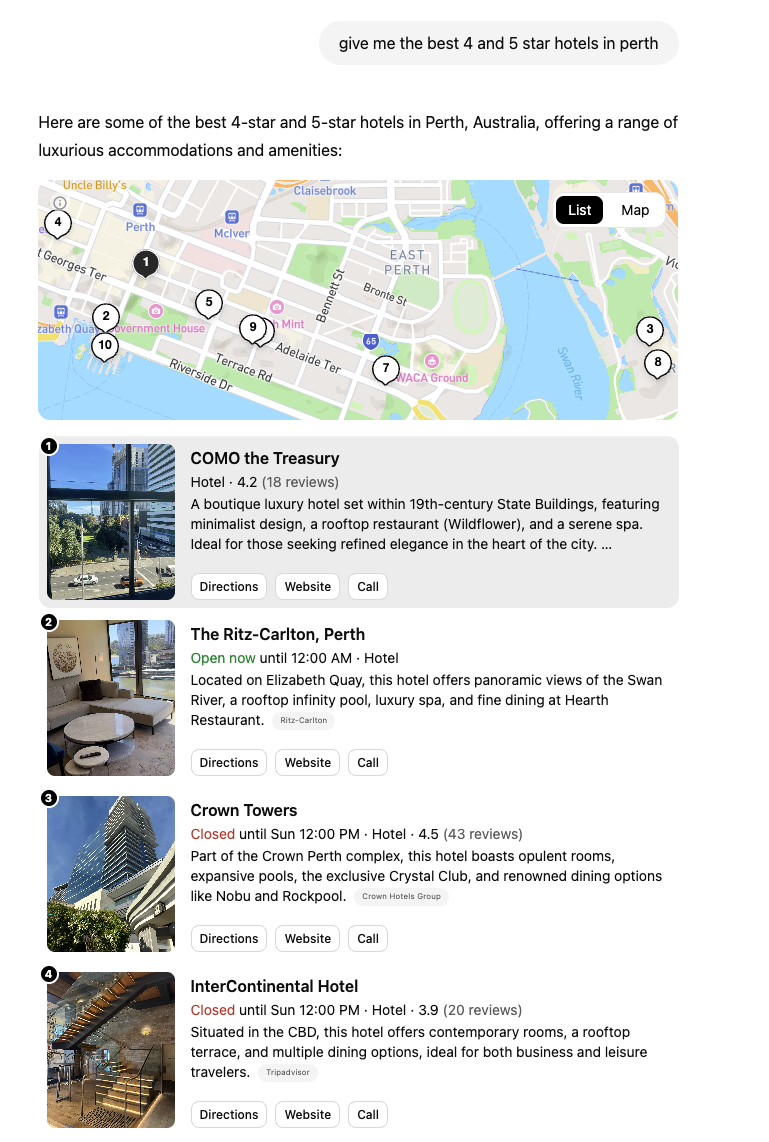
What most people don’t realise is that ChatGPT uses Bing by default as its search engine. If you ask it for the “best 4 and 5 star hotels in Perth”, like I did, it uses Bing search to bring back the results.
Being indexed by Bing has always mattered because Bing powers many second tier search engines like DuckDuckGo. With the rise of ChatGPT it matters even more.
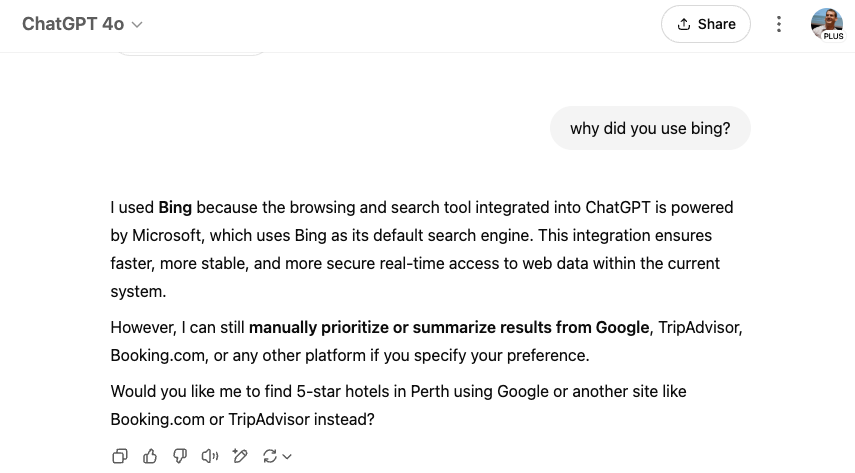
If ChatGPT is using Bing, it follows that we need to boost exposure in Bing search. A few simple action items that will move the needle:
- Set up an account in Bing Webmaster Tools and make sure your site is indexed.
- Getting de-indexed from Bing is a common problem we see, and I have written about it in our wiki article on being de-indexed from Bing. Often the cause is simple technical SEO issues. Our free SEO audit can do a quick analysis of your site in 60 to 90 seconds and surface any obvious issues that could be hurting you here.
- Claim your physical locations in Bing Places and make sure the Bing Maps listing is accurate.
- If you are an ecommerce business, make sure you are taking advantage of Bing Shopping. Just like Google Shopping, it is free to get listed and has both paid and free listings.
Monitor your mentions and audit your site for AI
We have been experimenting with a few techniques and tools for pushing rankings and exposure in ChatGPT and LLMs further. Two quick ones:
- Set up basic mention monitoring with Promptwatch. It is an excellent tool for monitoring mentions in LLMs and has a free seven day trial so you can test drive it before making a commitment.
- Audit your site with the free Promptwatch AI SEO Audit Tool. It is completely free and takes about 60 seconds. If you are like most sites it will recommend getting some basics in place like an llms.txt file.
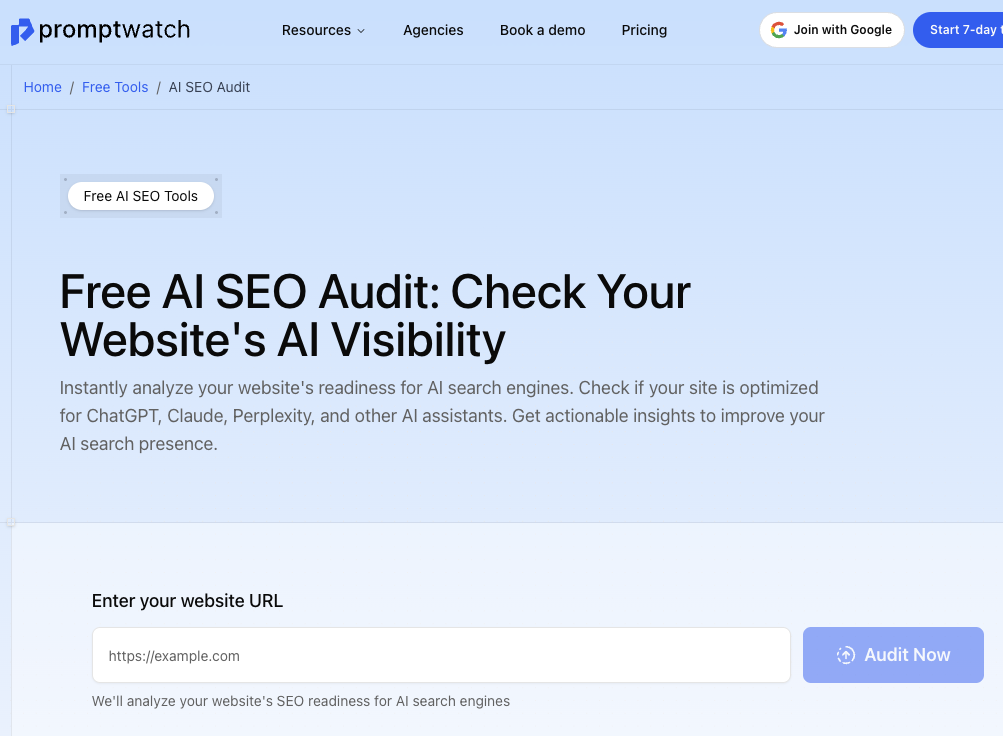
If you are interested in digging deeper on AI SEO, there is a whole bunch of other tools and resources on the Promptwatch site.
Get your schema markup right
Schema markup is hidden code on your site that provides additional information and metadata for search engines: your business phone number, address, your type of business and so forth. ChatGPT and LLMs use schema markup to understand more about your pages and your site, so it is an easy one to leverage.
SEO plugins typically insert basic schema markup sitewide, so go through your plugin settings and make sure they are complete and accurate. We typically use and recommend Rankmath as our WordPress SEO plugin of choice, especially over Yoast. Rankmath has a bunch of minor features that make it 1 or 2% better than other plugins, and in such a competitive SEO landscape that small difference makes a big difference. One thing we like about Rankmath is that it is quite good at schema markup, especially with the Pro version.
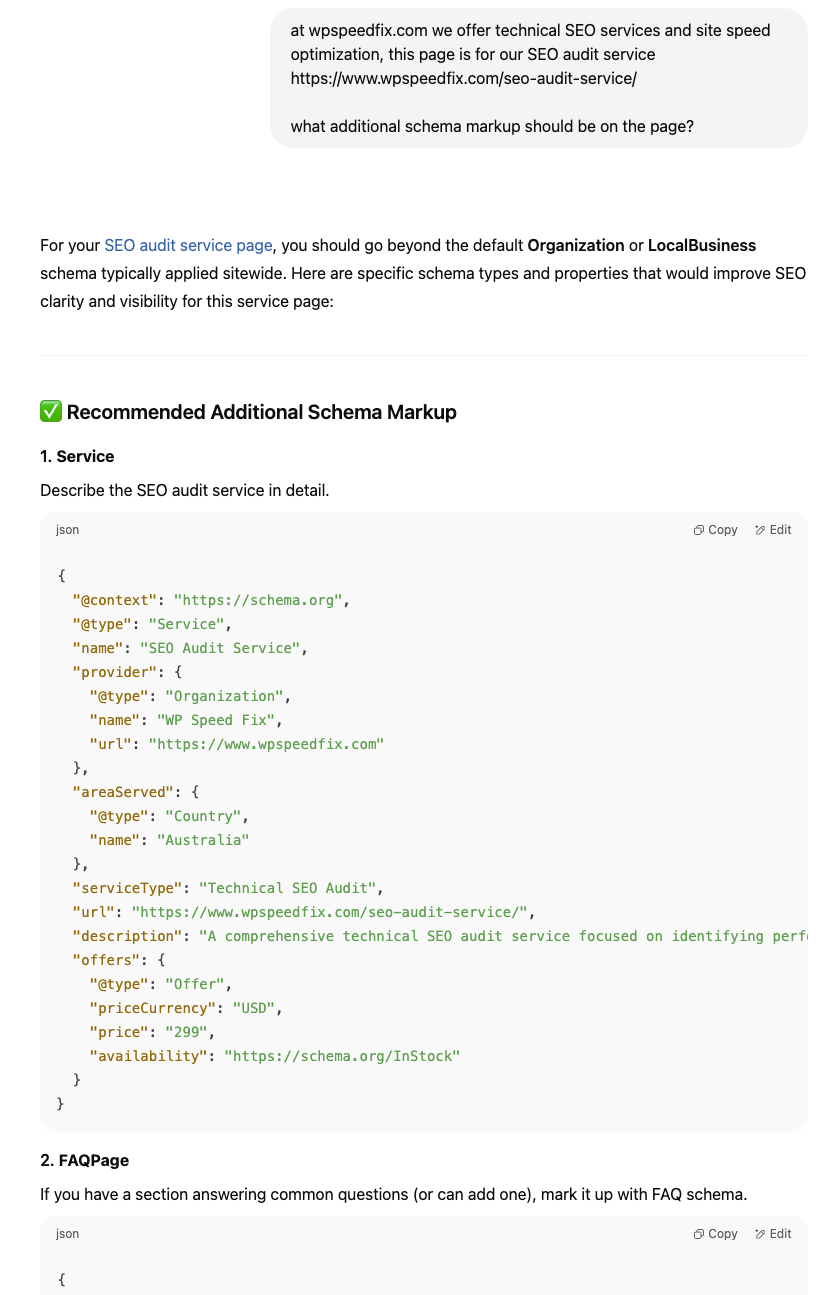
We have been taking schema one step further. For important pages we want to rank, for example services pages, we ask ChatGPT what schema markup we can use and what is missing. ChatGPT generates the schema code for us based on the information we give it. Sometimes it is not quite right, so we run it through the schema markup validator and tweak it before embedding it on the site.
AI search answers the unspoken intent
With the rise of AI, searcher behaviour has changed for some types of queries (not all). I had this discussion with a small business customer that runs a gym in a wealthy, touristy area. The gym is quite expensive compared to nearby gyms and attracts a lot of people who are travelling.
Pre AI, someone might search “gym near me” or “gym SUBURB”. They then process and filter the search results to match their detailed and unspoken intent, go to a few of the websites and decide who to call or email.
In the new AI world, that unspoken intent is now the question put to the AI tool. The search becomes “find me a gym near me with Concept2 rowers” or “find me a gym in Sydney CBD that is open at 6am tomorrow”. The AI then searches its own index, or goes to Google or another search index like Bing, does the processing and filtering and presents a short list of recommendations.
This means that to be eligible to show for these searches, the website and key online assets need to be more specific, more accurate and more detailed than ever before. Our gym customer has a ton of high quality, name brand equipment that cheaper gyms don’t have. They already rank number one for most gym plus suburb terms in traditional search, so our recommendation was to add a detailed list of equipment and equipment photos to the website. That way, when someone who is big into fitness or bodybuilding is travelling and makes that specific search in Google or another AI, the gym gets surfaced.

I gave similar advice to a photography client. Pre AI, someone might search “jewellery photographer”, “ecommerce jewellery photographer” or “wine bottle photographer” and then filter the results themselves. Now the search becomes “find me a wine bottle photographer in Sydney to take photos of my red wine bottles for my website” and the AI does all the searching and filtering and provides a condensed list. In this case, fattening out the portfolio section of the website was the key to ranking in LLMs for these very specific terms.
Practical action steps
Keep your maps listings up to date. If you are a physical business, make sure your Google, Apple and Bing maps listings are up to date, particularly opening hours, so LLMs are giving customers accurate times. Use the holiday hours fields too, so if your hours are different over a holiday it is immediately evident.
Get specific with the details. Be detailed with your content. If you are a plumber, on your “hot water repair” page list out all the different brands you work with, even if you work with all brands. That way when someone searches “Bosch hot water system repair”, you are more likely to appear.
Use portfolio or “recent work” pages. Particularly for photography businesses, or any business that builds or makes things, portfolio and recent work pages are an easy way to get highly relevant technical language into your website that otherwise won’t fit anywhere else.
Add a reviews page to your site. Collate all your online reviews onto a single page on your website and ideally wrap the reviews in schema markup. This gives AI search tools real natural language input from your customers to help guide their recommendations.
Use YouTube. We see so many sites using Vimeo or simple video file embeds. That isn’t a problem in itself, but YouTube gets special treatment from Google and other LLMs. They crawl the videos, transcribe them, and right now Google favours video search results. If you are doing anything with video, mirror it onto a YouTube channel and make sure the titles are relevant and keyword targeted.
Add a “Get started” page explaining your onboarding process. LLMs will feed a searcher a version of this, and all things being equal, if you have a simple “to get started, do 1-2-3” page and your competitor doesn’t, the LLM will lean towards recommending you.
None of this is exotic. Get indexed in Bing, keep your listings accurate, fix your schema, and write content that is specific enough to answer the detailed question someone is actually typing into an AI tool. If you are stuck or want us to look at your site, our SEO Audit service is usually the best place to start.
This article was first sent to the WP Speed Fix email list. If you would like tips like this in your inbox, you can subscribe here.